
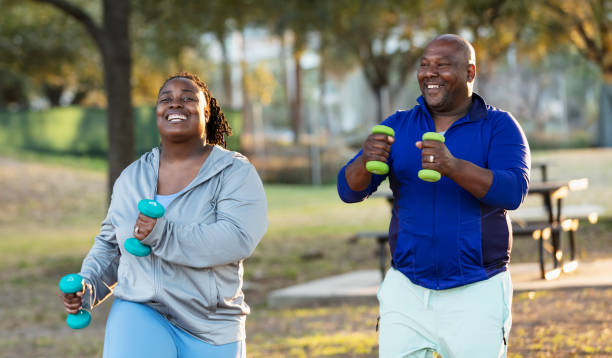
(BlackFitness101.com) Somebody in my class last week held up two little dumbbells and asked me flat out, “Do these actually do anything, or am I just carrying decoration?” I laughed, because that question lands in my lap more than any other. People want their stroll to count. They crave the sweat, the burn, the payoff. So they grab something heavy and take off down the block, praying the extra weight turns an easy outing into honest work.
Here is the truth, the kind I hand my own folks when nobody is trying to sell them anything.
We can start with calories, since that is what everybody obsesses over first. A weighted vest sits tight against your torso, right up close to your center of gravity. Your frame hauls it without much fuss, which forces your legs, your midsection, and your entire body to move more mass over every stride. That adds up. Strap on a manageable amount and your pulse may climb, your breath may deepen, and you can burn modestly more energy than you would walking without added weight. Dumbbells behave in a whole other lane. They dangle at the ends of your arms, so a smaller amount feels weightier in the moment, yet the true total stays tiny by comparison. Nobody is clamping 15 pounds into each fist and staying happy for a mile.
How fast you can move is the layer nobody thinks about. That extra mass on your trunk may allow you to hold a brisk cadence without the flailing, so you can keep a steady rhythm and let your heart rate ride higher for longer. Toss a hill or a treadmill incline into the picture and the effort climbs again. Try holding that same crisp tempo while gripping metal, though, and watch what can unravel. Your stride may shorten. Everything up top can bunch tight. The rhythm you need for a real cardio push may slip right through your fingers. Light hand weights can raise the effort slightly, but that benefit begins to disappear when they force you to slow down or interfere with your natural arm swing.
The way you carry yourself is where I watch bodies crumble. When that heft rides across your shoulders and spine, tucked into a firm harness, the centered load can make it easier to maintain natural arm movement and an upright position. That only holds true when the vest fits correctly and the weight stays manageable. Now pass somebody a pair of dumbbells and something sneaky can creep in. Their shoulders inch up toward their ears. Forearms lock up. Some lean forward, some round over, and pretty soon the neck and traps are hollering for reasons that have zero to do with fitness.
Then there is the plain question of whether the thing feels good on you for 30 straight minutes. A snug torso rig clings to you like a bookbag you plumb forgot about. Once it settles, you may quit noticing it and simply move. Clutching metal in both palms is a completely different animal. Grip strength fades. Your fingers knot up. On a warm afternoon your hands get slick and those bars slide around, so now you are squeezing harder just to keep from dropping one on your foot. All that clenching can travel up into your elbows, and none of it makes your outing any better.
Let me get into what each choice actually trains, because this outweighs any figure on a scale. A loaded torso makes a plain stroll more demanding for the lower body and stabilizing muscles. Your glutes work harder to drive you ahead. Quads and calves take on more of the load. Those deep stabilizers stay switched on to help hold you steady beneath the added burden. That does not turn walking into a replacement for proper strength training, but it can increase the challenge. The handheld route pulls your arms and shoulders into the mix, and if you pump with true intent, you may pick up a touch of upper-body work. Swinging them loose, though, is nowhere near the same as deliberately training your arms. Most folks let momentum run the show, which spends energy while building very little.
Now balance is where I turn dead serious, especially with my clients past 50. A centered mass stays more predictable, so your frame can travel close to the way it always travels, just carrying more. Steady. Nice. Put iron in your grip and you rewrite part of the equation. Each arm now swings its own pendulum, and every time you step off a curb or snag a crack in the pavement, those weights may tug you in directions you never planned. For a young athlete craving a challenge, that added demand may have a place. For anybody rebuilding balance, though, hand weights can create an unnecessary obstacle.
All of it circles back to staying in one piece. My deepest worry with the handheld habit is not always the outing itself. It is the wrist, elbow, shoulder, or neck irritation that may show up after repeated gripping and loaded arm swinging. Once fatigue changes your form, those joints can take on more stress. I have watched clients aggravate sore elbows and shoulders through precisely this kind of routine. A snug rig spreads its cargo across your trunk rather than leaving your hands and smaller joints to manage every pound. That is a huge reason I point most starters and many seasoned walkers toward the strapped setup when they crave more intensity. Even then, anyone dealing with significant balance trouble, arthritis, osteoporosis, or an existing back, neck, hip, knee, or ankle condition should speak with a qualified health professional before adding extra weight.
So are the little dumbbells worthless? Not one bit. If you already move clean, if your joints feel healthy, and if you honestly want deliberate arm work folded into a slow amble, light ones can earn a spot. Start with one to three pounds, keep your motion controlled, and stop when your grip, posture, or natural arm swing begins to change. Treat them like seasoning rather than the main plate. I reach for mine on recovery days when I crave gentle movement, not a beatdown.
But when your real aim is to make your stroll tougher, burn more energy, guard your form, and challenge the muscle that carries you through everyday living, the strapped choice wins for most people. It is the pick I recommend most often when somebody tells me they want their steps to matter. Ease in light, perhaps around 5 percent of your body weight, and begin with only 10 to 15 minutes. Increase either the time or the load gradually instead of piling on both at once. That gives your joints and connective tissue room to adapt.
Here is the deeper point I need you to catch under all the specifics. The finest tool is the one that lets you keep showing up without wrecking yourself, season after season, year upon year. A properly fitted rig can ride your trunk and fade into the background while your body does the labor. Handheld iron keeps begging for your attention and may tax the very joints you most need to shield. For the majority of walkers, that verdict writes itself.
Lace up. Load smart. Get those feet moving, and let every step carve out the strong, capable frame you are reaching for.
Staff Writer; Nina Brown
This queen brings over 10 years of fitness training experience, uplifting clients with real guidance, steady motivation, and a heart for healthier Black communities.
Questions? Feel free to email me at; NinaB@BlackFitness101.com.