
(BlackFitness101.com) A treadmill offers far more than the dull grind of one running pace, though most never bother to find out.
Now let me talk to you straight. I lost count of how many folks climbed onto that machine, bumped it up to a jog, fixed their eyes on the wall, then quit soon after, acting like they accomplished something. Same speed every time. Same tired expression. Then they ask me why the scale won’t budge. Of course, the treadmill alone does not settle everything happening on that scale. Food intake, daily movement, sleep, stress, medication, and health conditions all matter. But if the workout never challenges you, it is worth changing the routine.
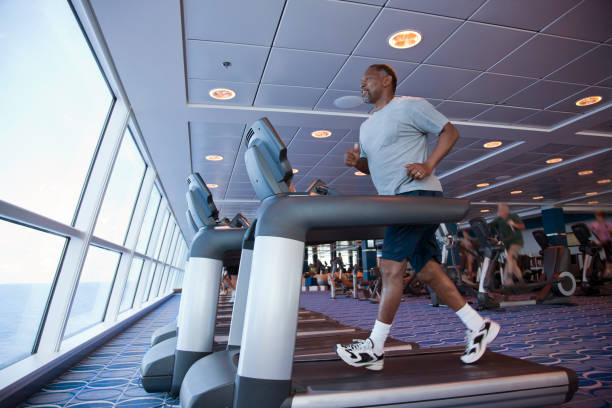
So I sit them down. I tell them the belt underneath their feet is a whole gym floor, not a punishment.
Start with walking. Before you roll your eyes, hear me out. Regular strolling gets dismissed because it seems too easy, too gentle, like it belongs to grandmas circling the mall at dawn. But brisk movement at a real clip, arms swinging, chest up, breath a little short, that’s honest work. Your heart doesn’t care whether you look impressive. It responds to demand. Set the pace where you can still speak in sentences but would have trouble singing a song. A good forty minutes of that and you’ve burned calories, protected your knees from unnecessary pounding, and stepped off able to reach your car like a grown person instead of limping.
I got a client, sixty two, bad hip. Man swore he couldn’t do cardio no more. Put him on a firm stroll, watched his numbers, and inside three months his resting pulse dropped and his pants fit looser. All from putting one foot ahead of the other with real intention.
Now the incline. This is where the magic hides, and hardly anybody bothers with it. Flat ground works fine, but tilt that surface up and everything shifts. Your glutes wake up. Hamstrings pull their weight. Those calves start talking to you the next morning. You don’t even need to move fast. Start with a manageable grade and build gradually. For some people, that may eventually mean six, seven, or eight percent at a moderate pace. Suddenly your lungs are working like you’re hiking a mountain trail behind some cousin who never gets tired.
The beauty of a hill you build yourself is control. Outside, a slope is whatever the road hands you. On the belt, you decide. Too much? Bring it down a notch. Got more in you? Nudge it higher. I like sending someone up a long climb for a good stretch, letting them recover flat awhile, then back up again. Their legs shake. Sweat pours off them. And they didn’t run a single step.
Steady climbing builds a base, and a base matters. But your body is smart. It adapts quick, and once things get comfortable, progress slows to a crawl. You gotta shake it awake. That’s what intervals do, and that’s what separates people who train from people who just show up.
The idea stays simple. Go hard, then go easy, over and over. Doesn’t matter if hard means a faster stride, a steeper climb, or both stacked together. What matters is the contrast. Push until you’re breathing heavy, ease off until you gather yourself, repeat until the clock says stop. Thirty seconds hot, ninety seconds soft, ten or twelve rounds of that. A demanding workout right there, completed in far less time than a long, steady session.
Your body may continue using slightly more energy during recovery after that kind of effort. Scientists got a fancy name for the whole thing. I just call it getting your money’s worth. The trick is honesty. When the tough part arrives, it should feel tough. Not miserable, not reckless, but real. Half efforts give half results.
Now here’s the move nobody expects. Backward.
Yeah, you heard me. Turn around and go in reverse. Stop the belt before turning around, attach the safety clip, then restart it at the lowest practical speed. Grab the rails and step back gently until you catch the rhythm. Looks ridiculous the first minute. Everybody laughs. Then they notice something.
Moving in reverse lights up muscles the forward direction ignores. Your quads take over a whole different way. The fronts of your shins, those tiny things nobody bothers with, finally get some attention. Your balance sharpens because the body has to stay alert without eyes leading the path. Backward walking is sometimes used as part of supervised knee rehabilitation. Research suggests it may strengthen the quadriceps and improve pain and physical function in some people, but anyone recovering from an injury should clear it with a medical professional or physical therapist first.
Begin with a couple rounds. Hold the rails until you trust yourself. Keep it low, no heroics. Anyone with poor balance should have professional supervision. As you improve, keep your hands close to the rails and concentrate on controlled, deliberate steps. Leave backward inclines and hands-free movement to supervised training, because one missed step can turn a useful exercise into a hard fall.
So look what we’re holding now. Four separate ways to work, all living inside the same machine. The question becomes how you put them together, and I’ll show you exactly how I’d stitch it for somebody wanting the whole package without ever breaking into a sprint.
Warm the engine with a few slow rounds of flat strolling. Then a solid stretch climbing a firm grade, moderate effort, breath working good. Slide into intervals next, alternating hard and soft for a quarter hour, mixing faster steps with steeper pitches. Cool it down, stop the belt, spin around, and give a few gentle rounds going backward on a flat surface. Close with an unhurried forward stroll until your heartbeat settles.
Half an hour and change, give or take. Heart trained. Legs challenged from every angle. Balance sharper. Joints respected. And never a moment of pounding yourself into the ground trying to prove you still got it.
That’s the point I want landing with you. Running is one tool. A fine tool, sure, for people who enjoy it and can perform it comfortably. But plenty of people can’t run, shouldn’t run, or flat out despise running, and somebody told them this equipment has nothing else to offer. Lie. Straight lie.
That deck under your soles bends to whatever you bring. Speed, angle, direction, rhythm. Learn to play with those four and you’ve got endless workouts hiding inside one piece of gear most only know a single way to use.
I’ve put in my own miles, and my knees have felt every one of them. Even now I get my conditioning right there, no jogging required, walking off better than I got on. That’s the goal. Not destroying yourself. Building yourself. Week after week, a little stronger than before.
Go find out what that thing can really do.
Staff Writer; Leroy Smith
I have spent more than 20 years in fitness and health education, helping people build stronger bodies and healthier habits. My work is rooted in uplifting the Black community through movement, knowledge, and long term wellness.
One may contact me at; LSmith@BlackFitness101.com.