
(BlackFitness101.com) I wish more beginners knew this before they ever got on the floor. You do not have to start your fitness journey by fighting your own neck. I have watched people grab behind their head, pull hard, rush through sit ups, then wonder why they feel awful the next morning. Half the time their stomach did not even do most of the work. Their neck did. Their lower back did. Their pride did. That is not a routine. That is somebody trying to guess their way into shape.
When I train someone new, I like to slow everything down. Not because I think they are weak, but because most folks never learned the basics. They heard somebody say, “Do crunches.” They saw a video. They remembered gym class from years ago. Then they tried to copy whatever came to mind. I do not teach that way. A good start should make you feel more connected, not confused and sore in strange places.
The middle of your frame has work to do all day long. It helps you stand at the sink, turn in the car, pick up laundry, carry groceries, sit tall at work, and get out of bed without groaning like the mattress betrayed you. I know people like to talk about flat stomachs, but I care more about strength that follows you around. Looking better can be part of the blessing, but moving better is the real prize.
One move I like for beginners is the dead bug. The name is ugly, I know. Every class I have ever taught, somebody laughs when I say it. Lie on your back with your knees lifted and bent. Put your arms up toward the ceiling. Press your lower back gently toward the floor. Now lower one arm while the opposite leg reaches out. Bring them back, then switch. The whole thing should feel slow and careful, like you are teaching your muscles how to behave.
Do not try to make that leg touch the ground if your back starts lifting. Shorten the reach. Keep the ribs from flaring up. Let your breath help you. Blow air out as the arm and leg move away. Breathe in when they return. Try five on each side. That may sound small, but do it right and you will feel why I picked it. This one teaches control, and control is what many beginners are missing.
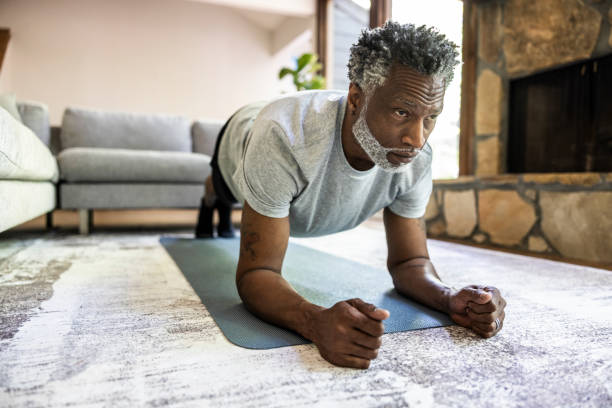
The second move is a plank, but let us not act brand new about it. Everybody does not need to start on the toes. Put your hands on a counter if that is where you are. Use the edge of a couch. Drop to your knees on a mat. Pick the version that lets you keep a clean shape. Shoulders steady. Belly firm. Hips not sinking. Neck relaxed. Hold for ten seconds and come down before everything starts looking wild.
I have seen people hold a plank for a minute and every second of it looked like a cry for help. That does not impress me. Give me ten good seconds over a long messy hold any day. If your back starts dipping, stop. If your shoulders climb up near your ears, reset. If you forget to breathe, come down and try again. There is no shame in learning. Shame is pretending bad form is progress.
The third move is heel taps. Lie on your back with your knees bent and feet flat. Let your arms rest by your sides. Lift your head and shoulders just a little, then reach one hand toward the same side heel. Come back through the center and reach the other way. Keep it slow. This is not church announcements where somebody is trying to hurry through before the food gets cold. Take your time and feel the sides of the waist wake up.
If your neck complains, put your head down and make the reach smaller. If your lower back feels off, pause and move your feet a little closer. People think changing a move means they failed, but that is not true. Adjusting is how grown folks train without hurting themselves. Your frame has a history. It has carried stress, children, work bags, long drives, and days you did not feel like dealing with anybody. Respect that history.
The fourth move is seated knee lifts. I like this one because the floor is not everybody’s friend every day. Sit near the front of a strong chair. Keep your chest lifted. Hold the sides if you need help. Raise one knee, set it down, then raise the other. Do not lean all the way back and let momentum take over. Stay tall. Move with care. Let the lower part of your midsection help bring the leg up.
Some people look at chair work and think it is too easy. Then they do it slowly and find out different. A chair can be a good teacher. It helps people who are nervous, tired, starting over, dealing with extra weight, or easing back after years away from fitness. There is nothing wrong with using support. Support is not weakness. It is a bridge. Plenty of folks need a bridge before they can cross into something harder.
Before trying all four, give yourself a few minutes to get ready. March in place. Roll your shoulders. Turn gently from side to side. Take a breath deep enough to remind yourself you are still in the room. I know warming up is not exciting, but neither is moving wrong and paying for it later. Three quiet minutes can save you a whole lot of fussing.
A simple plan is enough. Do five dead bugs on each side. Hold your plank for ten seconds. Do six heel taps on each side. Finish with ten seated knee lifts total. Rest when you need to. One round is fine at first. If you feel good, do another. Try it two or three days a week. Do not chase soreness like it is a trophy. Soreness can show up, but it should not be the whole point.
The biggest thing I want beginners to remember is this. Do not talk mean to yourself while you are learning. Do not lie on the mat calling yourself out of shape. Do not poke at your stomach like it is the enemy. Do not drag yesterday into every rep. You are starting today, and that has to count for something. Your health does not need insults. It needs attention.
These four moves are not fancy, but fancy is not always faithful. Dead bugs teach control. Planks teach steadiness. Heel taps help the sides. Seated knee lifts give you a place to start when the floor feels like too much. Keep the work honest. Keep the pace slow enough to learn. Keep showing up, even if the first few tries feel awkward. Most people do not need a perfect routine. They need one they will actually do again.
Staff Writer; Janet Banks
This sista is a fitness trainer with 17 years of experience and counting, helping people build stronger bodies, healthier habits, and a better relationship with wellness. Her work focuses on practical fitness, everyday nutrition, self care, and encouraging people to take care of their health one step at a time.
Questions? Feel free to email me at; JBanks@BlackFitness101.com.